ALD News: Let us know about your ALD events!

Plus events in Auckland and Nottingham, Hinckley’s Lovelace statue nears completion, Lovelace tram in Nottingham, and progress on the Fieldwork audio comedy.

Hi there,

It’s taken a while, but I’m happy to report that the Ada Lovelace Day website has now been migrated to a new host. I’m grateful to Ben Metcalfe for arranging complementary hosting at WPEngine for us back in 2012, and for WPEngine for honouring that gift up until last September. But companies grow and change, and it’s challenging to maintain a sponsor relationship over the long term when your champion moved on many years ago, so no hard feelings. But it’s good to now be on a platform where ongoing costs are predictable.

Organise your own ALD event!

There are just four weeks to go until Ada Lovelace Day on Tuesday 14 October. That’s plenty of time to organise your own event to celebrate the achievements of women in STEM! Whether you’re highlighting the work of amazing women in your own organisation or bringing in a speaker to delight and inspire, or doing something completely different, there are many ways to celebrate ALD.

If you’re hosting an Ada Lovelace Day event this year, please add it to our map – it’s always good to see what people are doing around the world.

And don’t forget, this year’s hashtag will be #ALD25. We’ll be active on BlueSky, LinkedIn and Facebook.

Worldwide events

We already have news of a couple of events:

Auckland, NZ

Long-term ALD supporter Tia Lush is organising an amazing event in Auckland, NZ on 14 October. More details to come.

Nottingham, UK

Skills for the Future: A Conversation with Suw Charman-Anderson, Digital Pioneer & Creator of Ada Lovelace Day. 14 October

I will be interviewed by Kate Whyles, Digital Innovation and Development Coach, and Sue Stack, Head of Student Experience at the Highfields campus of Nottingham Collegeby at Nottingham College.

This conversation will highlight the importance of continuous learning in STEM subjects and the ongoing need to dismantle gender barriers when attracting and supporting a balanced group of students in traditionally male-dominated courses.

We will focus on the significance of skill development and the ability to adapt to career changes. We’ll also address the limitations of AI, highlighting the essential role that human perspectives play alongside the necessary qualifications for women in STEM who wish to pursue their desired careers.

More details to come.

Hinckley’s Ada Lovelace statue

Ada Lovelace brass statue.You may remember that Stan Rooney has been campaigning to raise money for a statue of Ada Lovelace to be erected in Hinckley, Leicestershire. Hinckley is just five miles away from Lovelace’s now-demolished childhood home of Kirkby Mallory Hall, and it is known that she loved visiting the town.As Stan told the BBC:

We know Ada would visit Hinckley often as a child and would recognise sme of the buildings that still stand today in that area. She grew up to be such a celebrated and influential figure.

Hinckley was known for its hosiery industry, but that has all but disappeared, and its heritage is now a bit faceless. We hope the statue will help give the town another identity.

The statue, which was originally sculpted by Etienne and Mary Millner to stand on Ergon House on Horseferry Road in Westminster, is now being cast.

Stan has also told me that, “The planning committee gave us a round of applause after approving the application unanimously. The statue is due for delivery [at the end of September and] the plinth is being cut this week.”

Exciting news!

You can follow the project via their Facebook group.

Tram named after Ada Lovelace

A group of school children standing next to the Ada Lovelace tram. Thanks to Kate Whyles for letting me know that one of Nottingham’s trams, Tram 233, has been named after Ada Lovelace! The naming happened ten years ago, but Kate recently saw the tram out in the wild and let me know about it.

If you see Lovelace mentioned in unlikely places, do let me know. Back when I started Ada Lovelace Day in 2009, it seemed like no one had heard of her, so it’s delightful to know that all sorts of things are now being named after one of our computing pioneers!

Fieldwork audio comedy table read

I’ve been working hard on Fieldwork, my comedy podcast project which aims to encourage more women in ecology and environmental science whilst also sharing real science on biodiversity and the environment.

The script for the pilot is finished and we’re organising a group of voice actors to do an initial table read on Zoom so that I can then refine the script before we record a final table read and, hopefully, then professional record and produce a teaser trailer. This is all very, very exciting!

If you’d like to find out more about Fieldwork, take a look a my newsletter and subscribe for future updates!

That’s it for now! Over the next few weeks I’ll keep you up-to-date with regard to news about some of the indie events happening. Don’t forget to let me know what you’re doing, too!

All the best,

Suw

ALD News: Crowdfunder update, Tech4Good talk on YouTube, and York Festival of Ideas event this week

Subscribe to our newsletter to be kept up-to-date!

Hi there,

Firstly, I’d like to say thank you to everyone who has contributed to my GoFundMe so far. I started off with a goal of £1,300 on 29 April, and thanks to your amazing generosity we’re just just £178 away from £4,000!

Much of the news below comes to because of the generosity of Ada Lovelace Day’s supporters, so thank you all! And if you have a tenner, please do consider donating so that I can do more to keep Ada Lovelace Day going and continue making progress on my woman-focused eco-sitcom, Fieldwork.

ABC: Art, Biodiversity and Collaboration

If you’re in York this week and free on Wednesday 4 June 2025 from 6.30pm to 8pm, why not come along to ABC: Art, Biodiversity and Collaboration, a panel discussion that’s part of the University of York’s Festival of Ideas.

Tickets are free, although booking is required.

Join artist and art curator Dr Helena Cox, digital culture lecturer Dr Richard Carter, biologist and artist Dr Veronica Ongaro, photographer Paul Shields and me as we discuss about the relationship between art and biodiversity and share a bit about our own projects.

I’ll be talking about Fieldwork, my eco-sitcom which aims to engage the public with solutions to the biodiversity crisis, explain a bit about what ecologists do all day, and normalise the idea of women working in the field. Some *cough* years after I was out in the field as a geologist, it’s still seen as unusual for women to be out in the countryside doing sciencey stuff!

Fieldwork at an art/science knowledge sharing workshop

Thanks to my involvement in the ABC: Art, Biodiversity and Collaboration event, I’ve also been invited to take part in an environmental art knowledge exchange workshop at the University of York later in the month. I’ll be joining a group of artists, academics and civil society campaigners to explore the role of environmental art and activism in the UK.

It’s amazing to see that the ideas behind Fieldwork are resonating so strongly, particularly at this stage of the project where it’s just a newsletter and a pilot script. I’ve spoken to nearly twenty ecologists, rewilders, birders, bat researchers and others as part of my background research, and so many of them have said that they feel it’s incredibly important to find new ways to reach the public and share both solutions to the biodiversity crisis and the hope felt by a lot of people working out in the field.

Catch up on Ada Lovelace and the Future of Women in Tech

A couple of weeks ago, I was honoured to give an online talk at the Nottingham Tech for Good Festival. I gave attendees a very short history of Ada Lovelace, her parents and her contributions to the history of computing. I then talked about why diversity, equality and inclusion is still really important and what steps you can take to improve DEI within your company.

The recording is now available so you can watch it at your leisure if you missed it last week:

I had some really lovely feedback about it, so I hope you’ll enjoy it as much as the attendees on the day did.

What’s next for Ada Lovelace Day?

I’ve been thinking a lot about what we can do for ALD this year. The day is Tuesday 14 October, so keep that in your diary!

I don’t have the resources to organise an event, but I have been thinking back to the online content festivals that I did throughout the pandemic and am feeling a bit inspired!

My idea is to organise a retrospective and ask people who’ve been a part of Ada Lovelace Day over the years — whether as an attendee, speaker, sponsor or indie events organiser/participant — to write about why they took part and how it helped them and their community. I’d then schedule their posts to be published on our website over the 50 hours of Ada Lovelace Day.

Over the 16 years since I founded Ada Lovelace Day, I’ve never taken a look at it from the outside in and I think it’d be great to explore the impact that the day has had, to perhaps inspire the next generation of campaigners and supporters!

What do you think? Would you be interested in taking part? Please do leave a comment and let me know.

That’s it for now! Please don’t forget to take a look at the GoFundMe and chip in if you can.

All the best,

Suw

Ada Lovelace Day Live to end

It is with great sadness that I must announce that Ada Lovelace Day, as an annual event and year-round project to support girls and women in STEM, is closing. 

Despite the amazing response I have had and continue to have to Ada Lovelace Day Live and other work that I’ve done, and despite the vast number of people around the world who have put on their own Ada Lovelace Day events over the last decade and a half, I have not been able to raise the funding required to keep Ada Lovelace Day Live going. 

This means that there will be no further Ada Lovelace Day Live events and nor will I be able to continue the work I do year round, such as giving talks or writing about notable women in STEM. 

Ada Lovelace Day as a day in the calendar will continue — it has become a day that is celebrated all around the world and I encourage everyone to continue organising their own independent events. 

But there will be no official event, no online blog post marathon and minimal official activity on the day itself. The weekly newsletter will continue, but the monthly newsletter will be put on hiatus for a while whilst I work out what comes next. Our social media presence will now largely be automated and I will continue to mine our marvellous archives for videos, blog posts and articles you may have missed. 

Co-creating the future

I said at Ada Lovelace Day Live that I was interested in co-creating the future of ALD, and I am. If you have ideas for fully-funded projects that will contribute to our mission of getting more girls to study and pursue careers in STEM, and supporting women to flourish in STEM careers, please get in touch

There is still a lot of work to be done, but the world has changed a lot over the last 16 years, and I need to find a way to adapt ALD to this new reality. Events have lost their lustre, so I’m looking for new ways to reach and engage people. 

I am particularly interested in talking to individuals and companies who would like to take a novel and exciting approach to inspiring women into STEM, to wit, Fieldwork, my sitcom podcast about women and minority ethnic ecologists working at a field station. Initial development was supported by part of the i-COMET grant, and I will shortly begin fundraising to support script writing/editing and podcast production. Please do drop me a line if you’re interested

Why is this happening?

The root cause of our closure is a lack of financial support from the STEM industries. Whilst I have had lots of amazing sponsors, to whom I’m very grateful, on average we lost half of our sponsors every year and some years we lost all of them and had to start fundraising from scratch. That meant I had to spend more time fundraising and less time working towards fulfilling our mission to support girls and women in STEM. 

Furthermore, the big tech companies, such as Apple, Alphabet and Microsoft, have shown no interest in supporting ALD, despite hoarding some $1 trillion in cash and investments. Apple alone is squatting on $167 billion. They could fund the entire women in STEM sector and not even notice.

Those of you who have been long-time supporters will remember that I’ve been in this situation before — this is not a new problem, even if it’s one that has worsened recently. 

I’ve run several crowdfunding campaigns, including one in 2019 which was moderately successful. Despite that, in 2022 I was again looking at a significant financial shortfall. It was only when the BBC covered ALD’s imminent closure that I attracted sufficient sponsorship to continue. 

However, this year I raised a fraction of what I needed and, after many conversations with people across industry, it has become clear that the outlook for 2025 is equally poor. The STEM industries, along with others, are pulling away from gender equality work specifically and DEI in general, defunding or closing programs and firing DEI officers. Indeed, Forbes reports that “Meta and Google have quietly dialed back DEI efforts, and Microsoft made headlines when the company eliminated a set of DEI roles within its events team.”

Ada Lovelace Day is not unusual, we’re just the latest in a long list of organisations that have closed or simply gone dark: Tech Girls Movement, 500 Women Scientists, Women Who Code, Tech Talent Charter and Girls in Tech have all closed or halted work over the last 18 months. I know of another 20 or so groups that have gone dark over the last five years. 

I began working on what was to become ALD towards the end of 2008 and ran it part-time until 2015, when I raised enough money for it to become my full-time job. Over the last 16 years, I have made significant personal sacrifices to keep it going, but I can no longer afford to run ALD and my life on a shoestring. 

Thank you

I’d very much like to thank everyone who has supported me over the last 16 years. There are far too many supporters, volunteers, indie event organisers, advisors and companies to thank by name, but I am grateful to every one of you. Together, we made Ada Lovelace Day a global movement that has reached, supported and inspired millions of people. I feel phenomenally proud of that, and you should too.

— Suw Charman-Anderson, Founder

How to organise an Ada Lovelace Day Live watch party

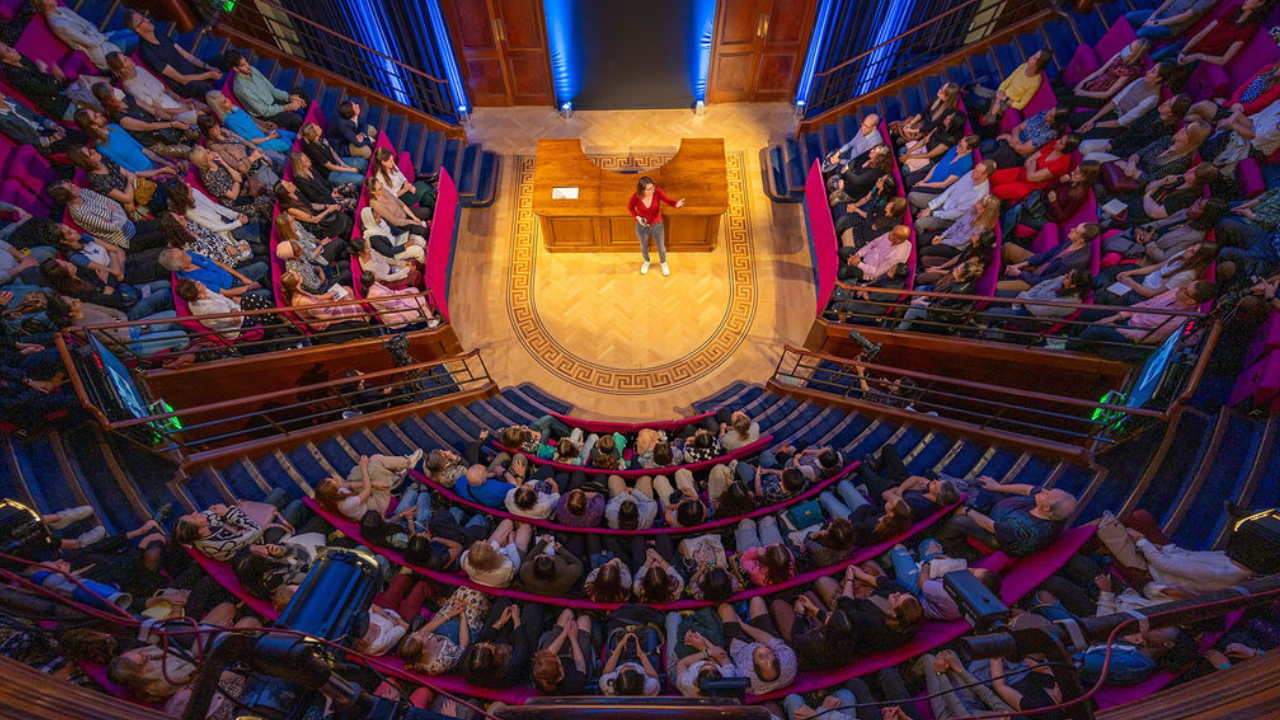
Ada Lovelace Day is an annual celebration of women in science, technology, engineering and maths which will be held this year on Tuesday 8 October. Our flagship event, Ada Lovelace Day Live, will once again be hosted by The Royal Institution in London, where seven women will talk about their work or research in front of a packed crowd.

If you’re not able to make it to London, you can still take part by watching our livestream. Indeed, why not organise a watch party? Tickets are available now, with standard tickets at £11.02 and concessions at £5.82. If you want to book a group larger than 10 people we have some significant discounts:

  • 11-100: 15% off
  • 101-500: 50% off
  • 501-1000: 70% off
  • Over 1001: 80% off

Email us now to arrange your tickets.

Here’s our handy guide to help you get started.

What’s a watch party?

According to the Cambridge Dictionary, a watch party is “an occasion when people watch a broadcast event together” or “an occasion when people in different places watch a television show, video, etc. at the same time and discuss it using the internet”.

Watch parties are a great way to celebrate Ada Lovelace Day and to feel a connection to everyone else who has gathered, in person at the Ri or at their own events around the world, to enjoy the show.

Prof Pen Holland, who organised a watch party at the University of York described it as “a fantastic opportunity to enjoy and celebrate Ada Lovelace Day live from your home or office, with your people, and a great way to make cool science and brilliant women in STEM accessible to everyone, everywhere, all at once.”

Tia Lush, creative director and trustee at STEM Wana Trust in Tauranga, New Zealand, organised a breakfast event, and said:

“When you live in a tiny country at the bottom of the world, it can be hard to feel connected to all the marvellous events taking place across the world, often in different time zones.

“By bringing a group of women together to mark Ada Lovelace Day and celebrate the amazing achievements of women, while watching the livestream from London, we were able to feel connected to a global movement.

“It was so successful that STEM Wana Trust has added this breakfast watch party to celebrate Ada Lovelace Day, to our annual event calendar and we will be encouraging our friends and partners on this side of the world to do the same.”

Organising an in-person watch party

All you need for an in-person watch party is a room with a screen or projector, an internet-connected computer to access the live stream, speakers for sound, and somewhere for people to sit.

Our performance usually starts at about 19:30 GMT, so how you structure your event will depend on where in the world you are. In Europe, the event will start a bit later, in the Americas it will be mid-morning to mid-afternoon, or breakfast in Hawai’i. In Australia and New Zealand, it will be an early breakfast on the Wednesday.

Key things to consider:

  • How many people can your room hold?

  • Do you want to provide food and/or drinks, or can people bring their own?

  • Do you want to invite a speaker to talk before or after the livestream (which is about 1.5 – 2 hours long)?

  • How will you let your community know about your event?

You could even organise a networking session as well, so that attendees can get to know one another.

Organising an online watch party

In 2023, tech company Docker, Inc organised an online watch party for their entire staff. As a fully distributed company, it wasn’t feasible to organise an in-person party, so they bought and distributed tickets for every employee so that they could watch from home.

Online watch parties are, in many ways, much easier to organise. You just provide your staff or community with tickets and use an online chat space for people to talk as the event unfolds. For some that might be a channel in the work Slack, or it could be a specific WhatsApp group or Facebook chat. Any tool that allows people to talk in real time will work.

Ticketing

Livestream tickets are available to buy now, and we are offering discounts for organisers who’d like to buy in bulk and follow Docker’s lead. Get in touch with numbers and we’ll arrange your tickets for you.

For public-facing events where you aren’t sure about how many tickets you will need, you have two choices: Either gather numbers ahead of the event and then buy the appropriate number of tickets, or you can ask attendees to buy their own tickets and check them at the door.

If you’re organising a watch party for any educational institution, or work with an underserved community, or live in a low-income country, then just pay what you can – if that’s one ticket per group, that’s fine. Carers can get free tickets by emailing the Ri.

Equally, if you can pay a little bit more, there’s an option to include a donation which will go a long way towards ensuring that the Ri can continue to support girls and women in STEM.

Let us know what you’re doing

Every year, people around the world organise lots of different types of events for Ada Lovelace Day. Whatever you put on, don’t forget to let us know by adding it to our map so that we can share your events with our community.

Need more help and advice?

Take a look at our Indie Event Organisers Pack, which includes flyer and poster blanks with our logo on, and our Indie Event roundel that you are free to use.

Save the date

Don’t forget to put Tuesday 8 October (or Wednesday 9 October for those in the Antipodes) in your calendar now, and start thinking about your plans.

See you in October!

Why we’re offering a discount to sponsors who commit long-term

Long-term sponsorship commitments are a win-win for both sponsors and recipients: Sponsors save money, time and effort whilst enabling crucial long-term financial planning and strategic growth for beneficiary organisations.

At Ada Lovelace Day, we tirelessly champion the achievements of women in STEM while simultaneously striving to find the sponsorship that allows our work to happen, all against a backdrop of a diversity, equity and inclusion (DEI) defunding crisis in the technology industry and beyond.

According to Tech Talent Charter’s annual report tracking diversity in the UK tech sector, DEI initiatives are increasingly being overlooked in favour of other business goals, while DEI role-holders say that they are finding it increasingly difficult to get their work done.

A recent report published by the grant-making charity ROSA highlighted that only 1.8 per cent of the £4.1 billion worth of grants awarded in 2021 went to the women’s and girls’ sector. Not only that, a third of all grants made for women’s and girls’s activities went to organisations with no such focus.

So, it is perhaps unsurprising that we often face an uphill battle to secure enough funding to sustain our mission. On average, we need to replace over 50 per cent of our sponsors each year. Given our aim is to invest in long-term growth – in our website, staff, strategy, and events like Ada Lovelace Day 2024 – long-term financial commitments that will see us through inevitable financial ‘ups and downs’ are needed more than ever.

That is why Ada Lovelace Day is now offering its sponsors a range of discounts, with up 20 per cent off for commitment of five years or more.

What’s in it for sponsors?

There are multiple potential benefits of long-term funding commitments for sponsors, both existing and new:

  1. You will increase your visibility and recognition: Sustained partnerships allow for greater visibility and recognition within our community and the wider women and girls’ sector.

  2. We will establish a more meaningful collaboration: Long-term relationships enable you to forge a more meaningful connection with us, and allow us to get to know you and your community better and to work more closely towards our shared goals.

  3. You will demonstrate your commitment to diversity and inclusion: Supporting Ada Lovelace Day on a long-term basis will demonstrate an unwavering commitment to advancing equality and empowering women in science and technology.

  4. Your investment will be more predictable: Knowing your support is secured for an extended period (at a reduced rate) allows you to more easily plan your CSR or marketing spend.

  5. You’ll save time and money: No more telephone tag or email ping-pong, and no more long discussions with your team to decide whether or not to go ahead with sponsorship this year. Instead, you can proceed knowing that our relationship is secure.

How do long-term commitments benefit Ada Lovelace Day?

Long-term financial support is revolutionary for small organisations like Ada Lovelace Day, not unlike the women we support.

  1. We can more easily plan for the long-term: By creating income predictability, long-term funding paves the way for strategic financial planning and business growth, enabling us to amplify our impact year-on-year.

  2. We can build strong relationships with subcontractors: Like many small organisations, we primarily work with freelancers and other small businesses, who also have unpredictable incomes. It is far easier to develop meaningful relationships with these individuals when the budget it set for the coming years and we can commit to working together in the long term.

  3. We can invest in strengthening our foundations: Income predictability allows us to commit to long-term projects, such as reworking our rather tired website, or developing new community building initiatives.

  4. We can save time and money, and can focus on what really matters: Sponsor acquisition is very time-consuming, so the more time we save looking for funders, the more time we can spend on what’s really important: supporting women in STEM.

If you’re interested in becoming a long-term sponsor of Ada Lovelace Day please download our prospectus via the form on our website or email me!