ALD22: Shraveena Venkatesh, Marine Conservationist

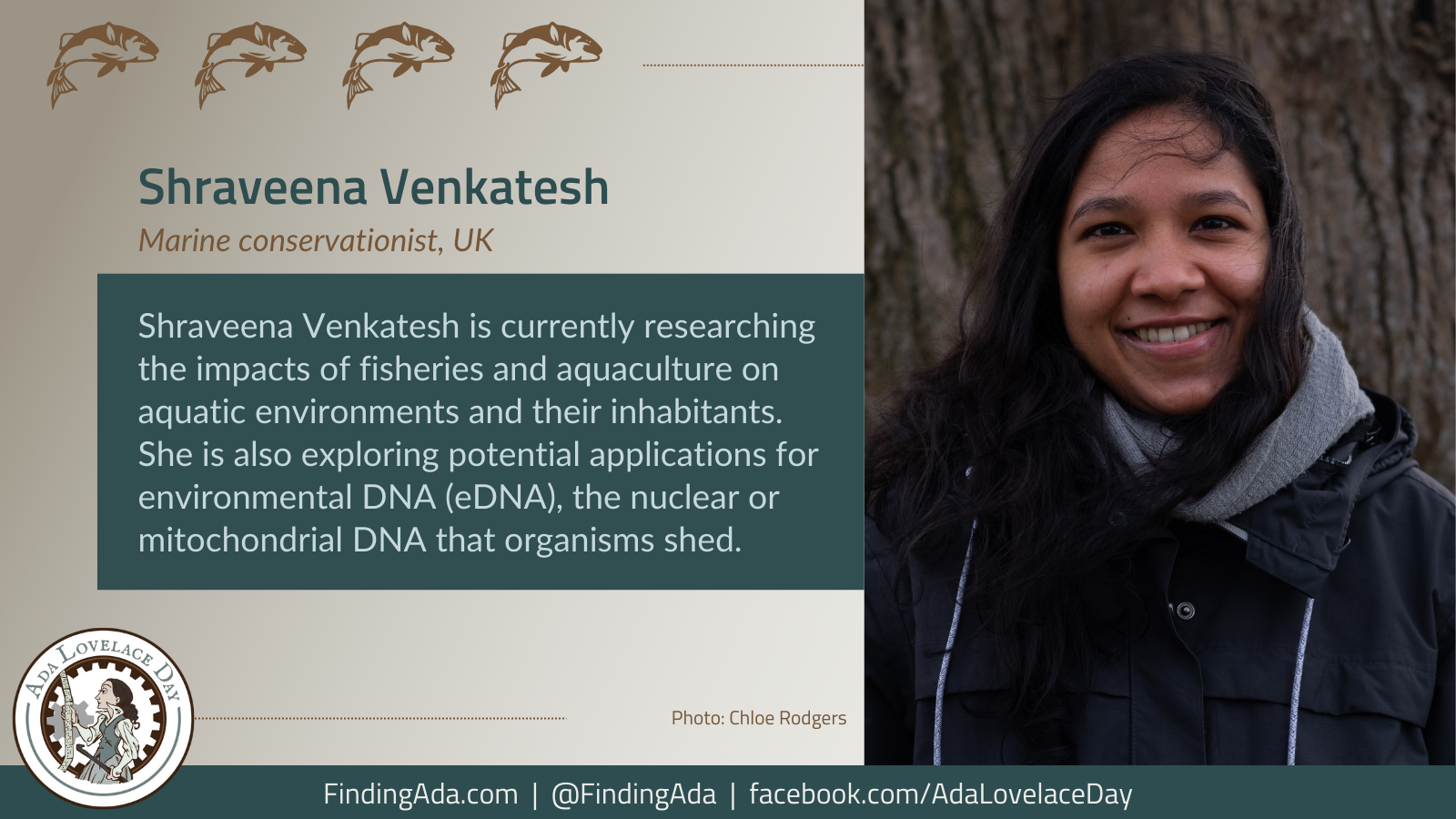
Shraveena Venkatesh

This post was contributed by Chloe Rodgers and is an extract from her Highland Women in STEM project. 

Shraveena Venkatesh

Shraveena Venkatesh is a PhD student at The Rivers and Lochs Institute University of the Highlands and Islands, currently researching the impacts of fisheries and aquaculture on aquatic environments and their inhabitants. She is also exploring potential applications for environmental DNA (eDNA) – nuclear or mitochondrial DNA that an organism sheds into the environment. She obtained her MSc in Marine Biodiversity and Conservation at Ghent University in Belgium, and took her original BSc in Zoology, Botany and Chemistry at Christ University in Bangalore.

She first became interested in marine animals aged 12 years old, spending much of her time at the beach. Venkatesh collected shells and examined crabs, pondering about other species in the ocean. Documentaries and books about marine animals strengthened this interest, and led to her pursuing her BSc. During this time, she developed an interest in conservation and exploring the effect of humans on marine environments and organisms.

Venkatesh’s PhD journey has allowed her to collaborate with many other PhD students and researchers, several of whom are also women like herself. She has found this a very rewarding and inspiring environment to be part of. When asked how she thought girls could be encouraged into STEM careers, she said:

“I think young girls should be inspired to read more and to be curious and critical. They should also be encouraged to play with more active toys at a young age, rather than passive ones that are traditionally considered more suitable for girls. As a society we need to resist stereotyping genders and assuming the characteristics or abilities of people based on their gender. Other women, successful in STEM, could be inspiring role models to young girls. Encouraging girls at school when they are interested in STEM subjects could give them the motivation and confidence to learn more and to persevere at succeeding in these fields.”

You can follow her work via her website, Twitter or LinkedIn.

When did you first become interested in your subject area?
I developed an interest in marine animals when I was about 12 years old. I spent time at beaches collecting shells, following crabs and wondering what other animals lived in the vast oceans. I watched a lot of documentaries about marine life and read a lot about the most charismatic marine animals too. While doing my bachelor’s and master’s degree this passion of mine strengthened. I also formed an interest in conservation and in the impacts of human activities on marine environments and organisms.

What do you love about your job/course?
My favourite thing about doing a PhD is that I learn something new and interesting every single day. It’s been a very exciting and rewarding journey so far. In the office and lab, there are other PhD students and researchers working on various subjects, each bringing a different perspective to our daily discussions and conversations and teaching me something new. Several of them are intelligent, capable, young women, successful in their fields, which makes it a very inspiring environment to be in.

What’s the most interesting thing you’ve learned recently? (STEM related!)
Orcas’ brains have limbic systems, like humans do. This means they can feel and process complicated emotions which affects their behaviour.

What do you think could be changed to better encourage more girls into your line of work/a STEM career?
I think young girls should be inspired to read more and to be curious and critical. They should also be encouraged to play with more active toys at a young age, rather than passive ones that are traditionally considered more suitable for girls. As a society we need to resist stereotyping genders and assuming the characteristics or abilities of people based on their gender. Other women, successful in STEM, could be inspiring role models to young girls. Encouraging girls at school when they are interested in STEM subjects could give them the motivation and confidence to learn more and to persevere at succeeding in these fields.
ALD22: Professor Irene C Peden, Electrical Engineer

Irene C Peden

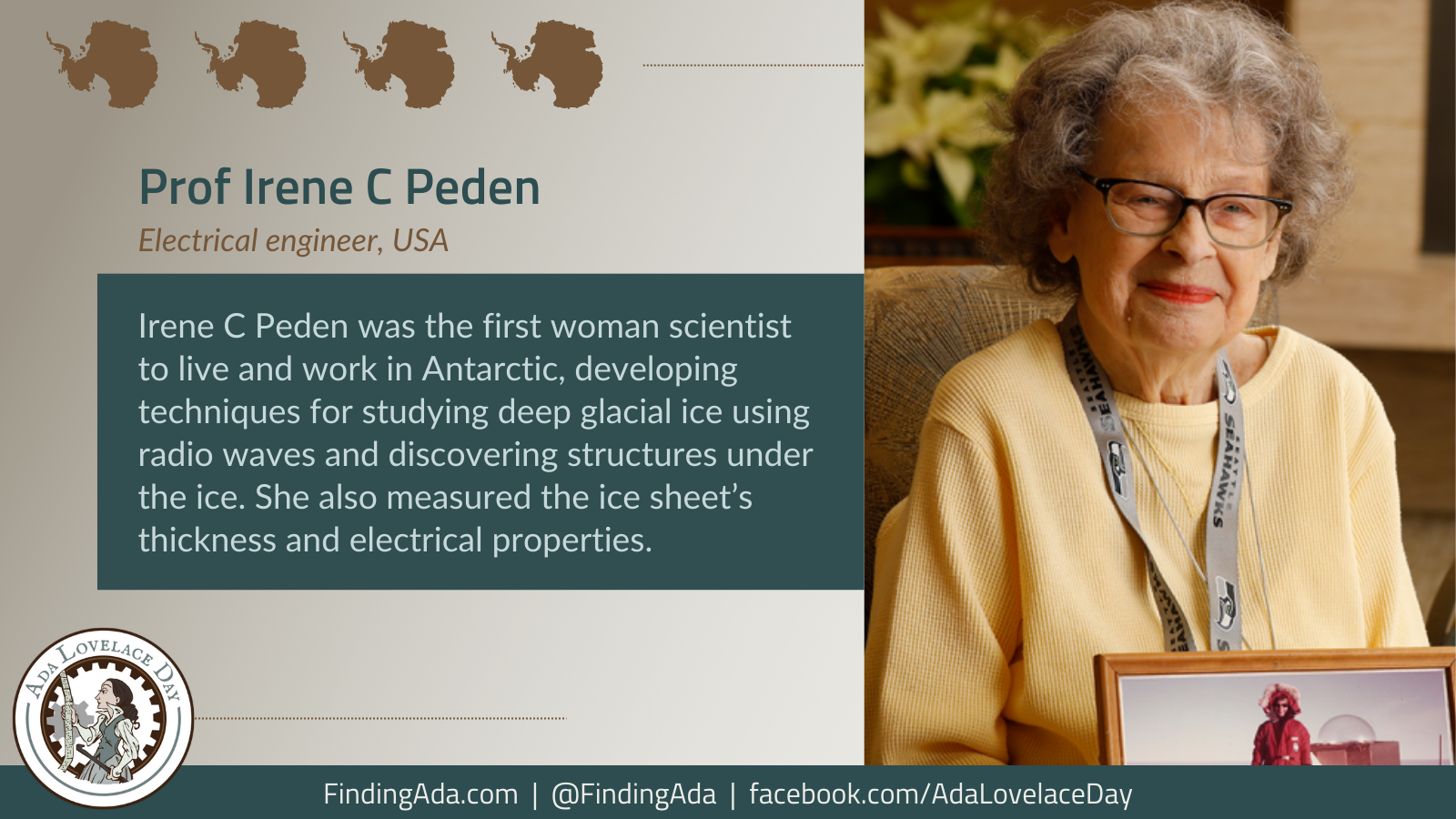
Professor Irene C Peden

Irene C Peden is an electrical engineer who was the first woman scientist to live and work in the interior of the Antarctic, developing techniques for studying deep glacial ice using radio waves.

Born in 1925 in Topeka, Kansas, Peden graduated from the University of Colorado when she was 22 with a degree in electrical engineering, although she was often the only woman in her classes. She worked in industry as an engineer from 1947 to 1954, but returned to education to get a masters and PhD from Stanford University, becoming the first woman to get a doctorate in electrical engineering from them. She joined the electrical engineering faculty at the University of Washington in 1961, again the first woman to do so. She served as president of the IEEE Antennas and Propagation Society, and was awarded their “Man of the Year” award. She was promoted to a professor in 1971, associate dean in 1973, and associate chair of the department in 1983.

She visited the Antarctic in 1970 to investigate the electrical characteristics of glacial ice, becoming the first female engineer or scientist to carry out research there. Because of the US Navy’s prohibition on women travelling alone to Antarctica, she had to find another woman to go with her but the New Zealand geophysicist who was supposed to join her failed her physical. Instead, a Christchurch librarian Julia Vickers, who was also an alpinist, took the job.

Three years earlier, the US Army Cold Regions Research Laboratories had drilled a 2.16km hole in the ice, and Pedersen lowered a probe 1.67km into the hole to study how very low frequency radio waves travelled through the ice. Her instruments also measured the electrical properties of the ice.

Because of the Navy’s scepticism of women, Peden was told that if she didn’t produce and publish robust scientific results, they would not allow other women to travel to Antarctica. Peden’s experiments were successful, and she expanded her work to measure the thickness of the ice sheets, and used very high frequency radio waves to discover structures under the ice. In 1979, she spent the whole winter at the South Pole, again the first woman to do so.

In 1993, she was named the National Science Foundation’s Engineer of the Year and was included in the American Society for Engineering Education’s Hall of Fame. A line of cliffs in Antarctica have been named after her by the Advisory Committee on Antarctic Names.

Further Reading

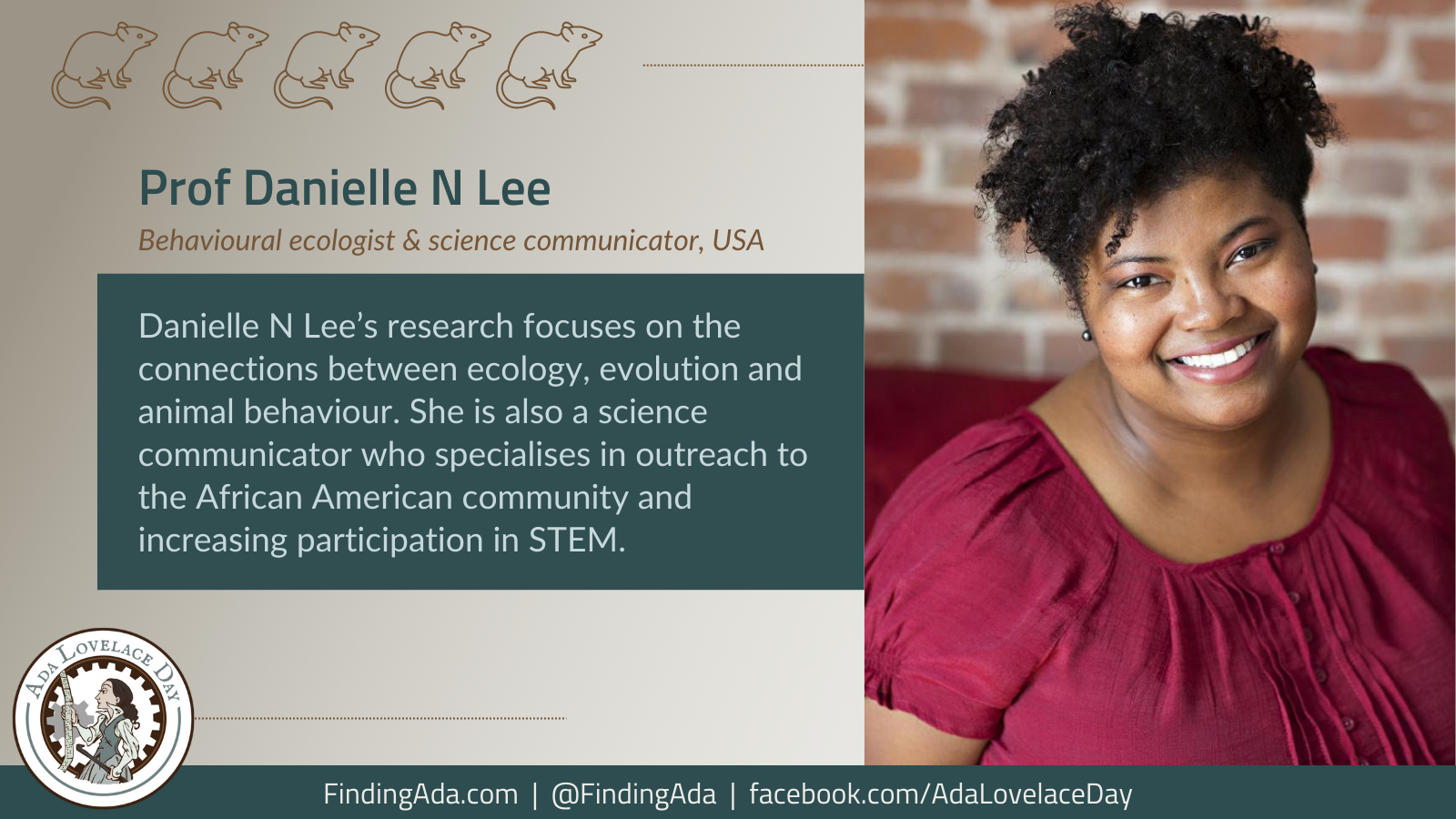
ALD22: Professor Danielle N Lee, Behavioural Ecologist

Danielle N Lee

Professor Danielle N Lee

Danielle N Lee is a biologist whose research focuses on the connections between ecology, evolution and animal behaviour. From South Memphis, Tennessee, she earnt her bachelor’s from Tennessee Technological University in 1996, her master’s from the University of Memphis, and her PhD in biology from the University of Missouri-St Louis.

Lee’s research focuses on the extent to which the African giant pouched rat, Cricetomys ansorgei, exhibits behavioural syndromes, and the potential role of genetics in these behaviours. She has worked in Tanzania, collecting data on female rat biology, which is currently understudied. She also studies the behavioural differences between small rodents in urban and rural settings in the St Louis Metropolitan region.

Lee is also well known as a science communicator who specialises in outreach to the African American community and increasing the participation of under-served communities in science, technology, engineering and maths (STEM). She co-founded the National Science & Technology News Service, a “media literacy initiative to bring more science news to African-American audiences and promote science news source diversity in mainstream media”.

In 2009, she was honoured as a Diversity Scholar by the American Institute of Biological Sciences. In 2013 she was given the STEM Leader Award by the Kansas City Black Family Technology Awareness Association. She was one of EBONY Magazine’s Power 100 in 2014, a 2015 TED Fellow, and a White House Champion of Change in STEM Diversity and Access.

Further Reading

ALD22: Professor Rita Levi Montalcini, Neurobiologist

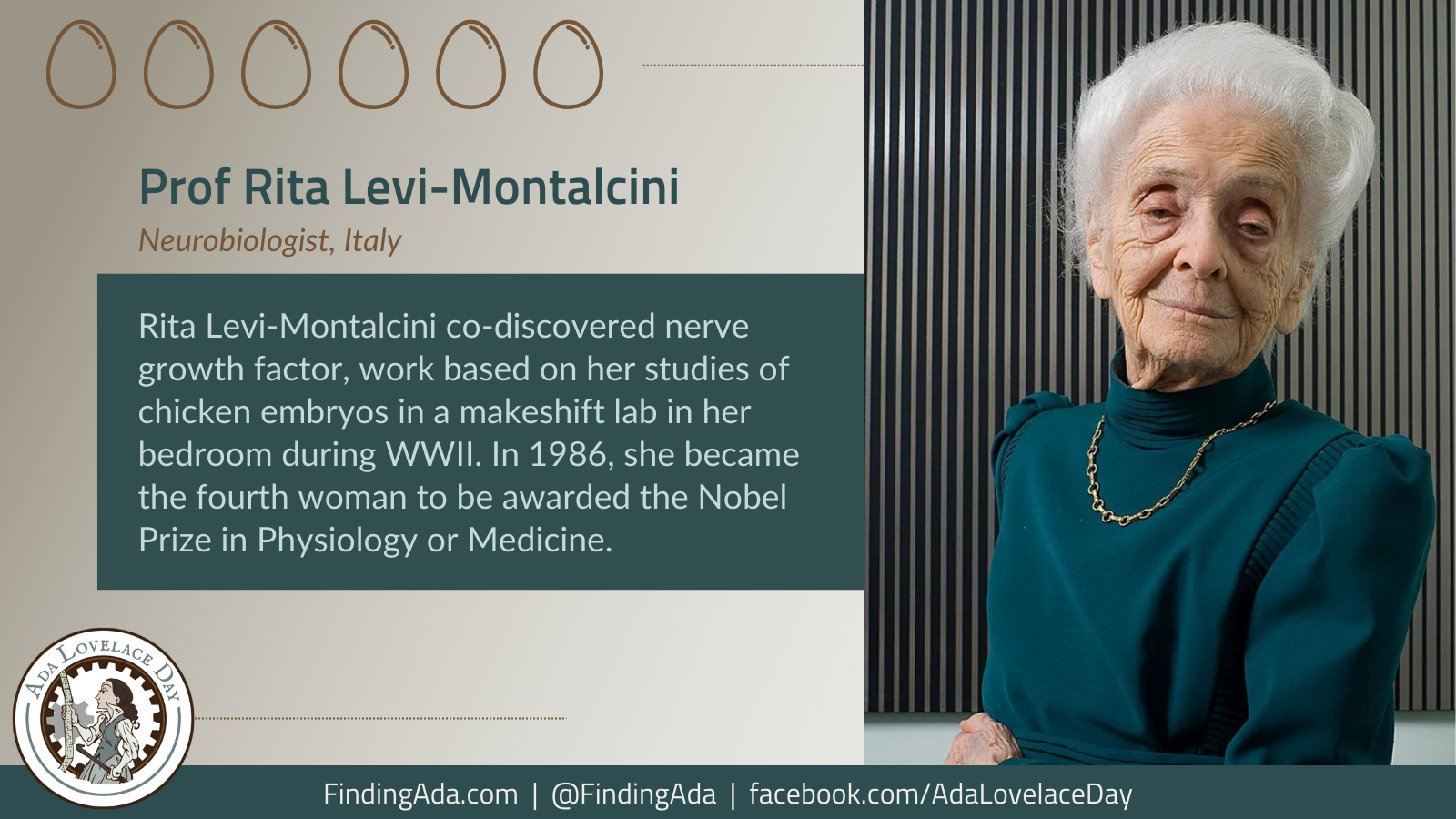
Professor Rita Levi-Montalcini

Rita Levi-Montalcini was a neurobiologist who discovered nerve growth factor in collaboration with her colleague, Stanley Cohen. They were both awarded the Nobel Prize in Physiology or Medicine in 1986, and Levi-Montalcini became only the fourth woman to be awarded the prize.

Levi-Montalcini was born in Turin in 1909. She graduated summa cum laude from the University of Turin Medical School in 1936, staying there to investigate the development of the nervous system. But she lost her job just two years later when Mussolini banned Jews from academic and professional careers.

Unable to officially work, she began buying fertilised eggs and studying chicken embryos in a laboratory that she set up in her bedroom, working in “primitive conditions”. She focused on understanding how nerve fibres grow in the embryos’ wings using microsurgical instruments she made herself from tools such as sewing needles and watchmakers’ tweezers. As the Guardian reported in her obituary, “many of the experiments could be eaten when they were finished.”

In 1943, she and her family fled to Florence, where they were protected from the Nazis by non-Jewish friends. After the war, they returned to Turin and in 1946, she moved to the US to take up a short term position at Washington University in St Louis, in Missouri. She successfully duplicated the experiments she’d done in her bedroom, and was offered a research associate position. She stayed at the university for 30 years.

In 1952, Levi-Montalcini grafted mouse tumour tissue onto chick embryos, and discovered that the cancerous tissues caused the rapid growth of nerve fibres. Somehow the tumour was encouraging nerve fibres to grow. She isolated a protein that she called nerve growth factor (NGF) from these cancerous tissues. This was painstaking and difficult work, but its importance to embryology and oncology was clear.

She became a professor in 1958 and four years later established a second lab in Rome, splitting her time between Italy and the USA. She became the director of the Research Centre of Neurobiology of the CNR (Rome), and then became director at the Laboratory of Cellular Biology of the Italian National Council of Research. In 2001 she became an Italian senatore a vita, or senator for life, able to sit in the Italian upper house of parliament. In 2002, she founded and later became president of the European Brain Research Institute.

She died in 2012, aged 103.

Further Reading

ALD22: Professor Maria Pavlova, Palaeontologist

Maria Pavlova

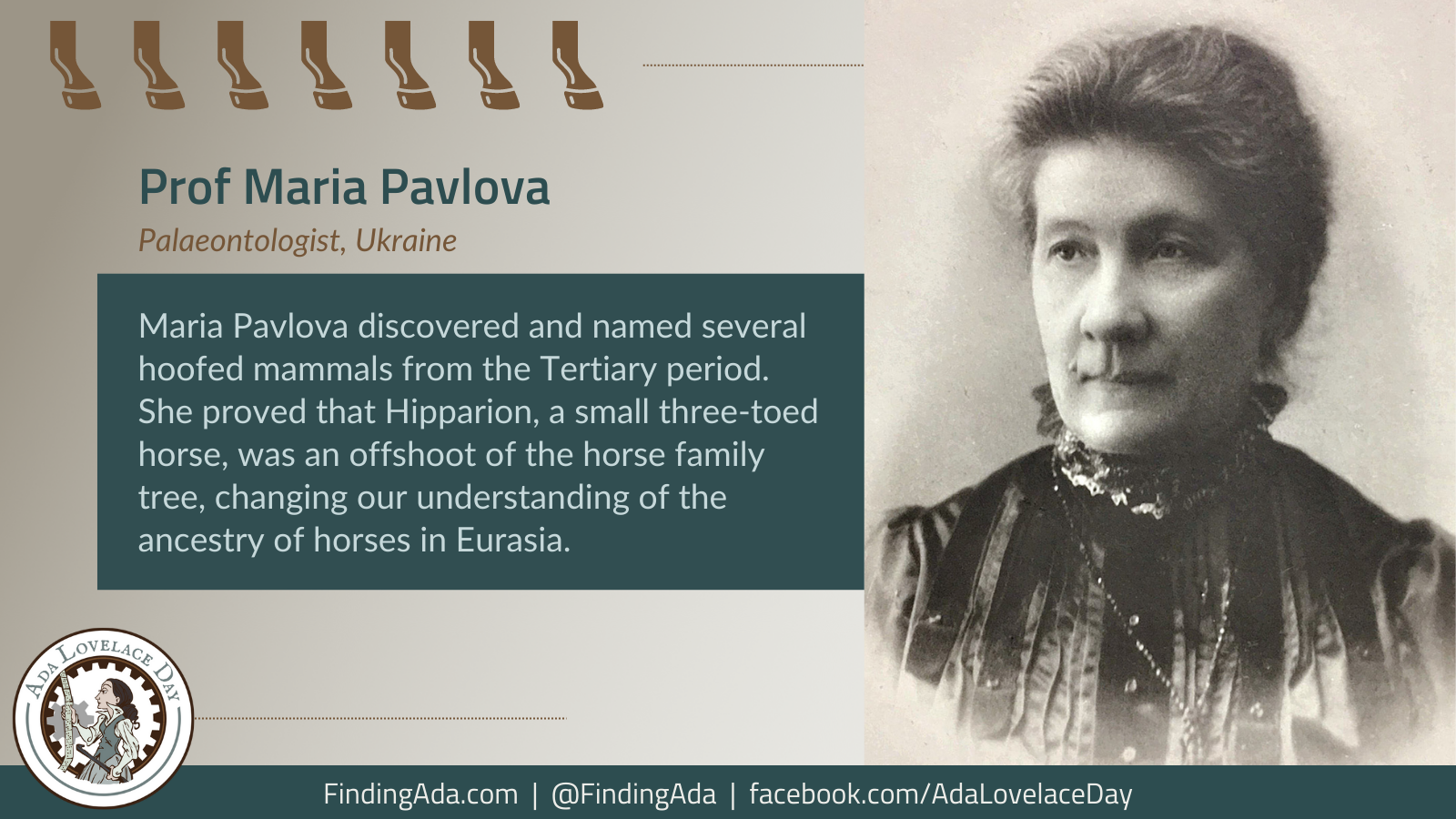
Professor Maria Pavlova

Maria Vasilievna Pavlova, Мария Павлова, was a palaeontologist who discovered several hoofed mammals from the Tertiary period and changed our understanding of the ancestry of horses in Eurasia.

Born in 1854, from age 26, Pavlova studied natural history at the National Museum of Natural History in Paris and the Sorbonne, graduating in 1884.

After graduation, she moved to Moscow where she began studying the geological collections held by the Moscow State University, where she worked for 30 years. She would go on to establish the Museum of Palaeontology there.

Pavlova began her career writing papers on Early Cretaceous ammonites from the Volga region before moving on to Tertiary mammal evolution. She travelled widely around Russia and Western Europe, studying museum collections and collecting fossils herself. She named and described several extinct species, including a rhinoceros P. transouralicum.

She also worked on the ancestry of horses, proving that Hipparion, a small three-toed horse, was not the direct ancestor of the modern horse as thought at the time, but an offshoot of the horse family tree. She then focused on ungulates (hoofed mammals) and proboscidians (elephants and their extinct relatives), especially mastodons.

In 1897, she was one of just two women to be invited to join the Organising Committee of the International Geological Congress, which was held in St Petersburg. Between 1887 and 1906, she published nine issues of Studies in the Paleontological History of Hoofed Animals. In 1899, she published a monograph, Fossil Elephants.

She became the head of the department of palaeontology at Moscow State University in 1910, and by 1912, she had collected over 10,000 specimens, which she gave to the university. In 1916, became a doctor of zoology of the Imperial Moscow University, an “extremely rare” rank for a woman.

She became a professor at the Moscow State University, and was instrumental in founding its palaeontological museum. In 1926, the museum was named after her and her husband who was also a geologist and palaeontologist.

Pavlova was the first Ukrainian or Russian woman to become a national and internationally successful vertebrate palaeontologist. In 1925, she was elected as a corresponding member of the Russian Academy of Sciences, and a year later the Geological Society of France awarded her and her husband with a gold medal for their work.

She went on her final geological expedition in 1931, collecting fossil mammoths, elephants and rhinos from the Volyn district of northern Ukraine.

Further Reading