iTunes | Google Play | RSS (Soundcloud) | Stitcher
Welcome to the Ada Lovelace Day podcast, highlighting the work of women in STEM. Each month, we talk to women from around the STEM world about their careers, as well as talking to women and men, about historic and modern women’s achievements, discoveries, and inventions.
In this episode
00:42: Computer programmer Elen Gwynne talks about how she transitioned from astrophysics to software.
20:50: Discovery (Invention!) of the Month – The Compiler
24:45: Professor Jim Al-Khalili OBE talks about the first woman to become a professor of physics in the UK, Professor Daphne Jackson.
 Our interviewees
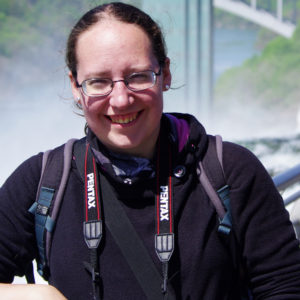
Elen Gwynne
Elen Gwynne is a software programmer in London. She studied astrophysics at Edinburgh, where she was introduced to computer programming. After a programming based summer placement, she decided to take up programming as a career.
Professor Jim Al-Khalili OBE
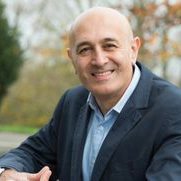 Jim Al-Khalili is a theoretical nuclear physicist, author and broadcaster based at the University of Surrey in England. He received his PhD in nuclear reaction theory in 1989 and has published over a hundred research papers in the field. He is a well-known presenter of TV and radio in Britain and his many popular science books have been translated into 26 languages. He is a recipient of the Royal Society of London’s Michael Faraday medal and the Institute of Physics Kelvin Medal. In 2016 he received the inaugural Stephen Hawking medal for science communication. He lives in Southsea in Hampshire with his wife Julie.
Jim has two new books out, Aliens: Science Asks: Is There Anyone Out There? and Quantum Mechanics (A Ladybird Expert Book), and you can listen to him interview a wide variety of women (and men!) in STEM in The Life Scientific on BBC Radio Four.
You can find out more about Jim on his website or Wikipedia, and can follow him at Twitter @jimalkhalili.
If you’d like to to know more about Professor Daphne Jackson you can take a look at her Wikipedia page, and if you’re a woman in STEM thinking about returning, take a look at the Daphne Jackson Trust website.
Discovery of the Month
More of an invention than a discovery, the first compiler was written in 1951 by mathematician and programmer Grace Hopper, who would go on to become a Rear Admiral in the US Navy. She also suggested as early as 1949 that computer programming languages might use English keywords.
You can read an imagined conversation with Hopper on the Libertine website.
Thanks to our sponsor
This podcast is brought to you thanks to the generous support of ARM, our exclusive semiconductor industry sponsor. You can learn more about ARM on their website at ARM.com and you can follow them on Twitter at @ARMHoldings.
If you would like to join ARM as a sponsor of the Ada Lovelace Day Podcast, please email us.
Get in touch!
If you’d like to send us feedback about the show, or if you’d like to take part, please email us. We’re especially interested in hear from men who would like to talk to us about the women in STEM who have influenced them, especially those women who are less well known.
Credits
Episode edited by Andrew Marks.
 Elaine Chew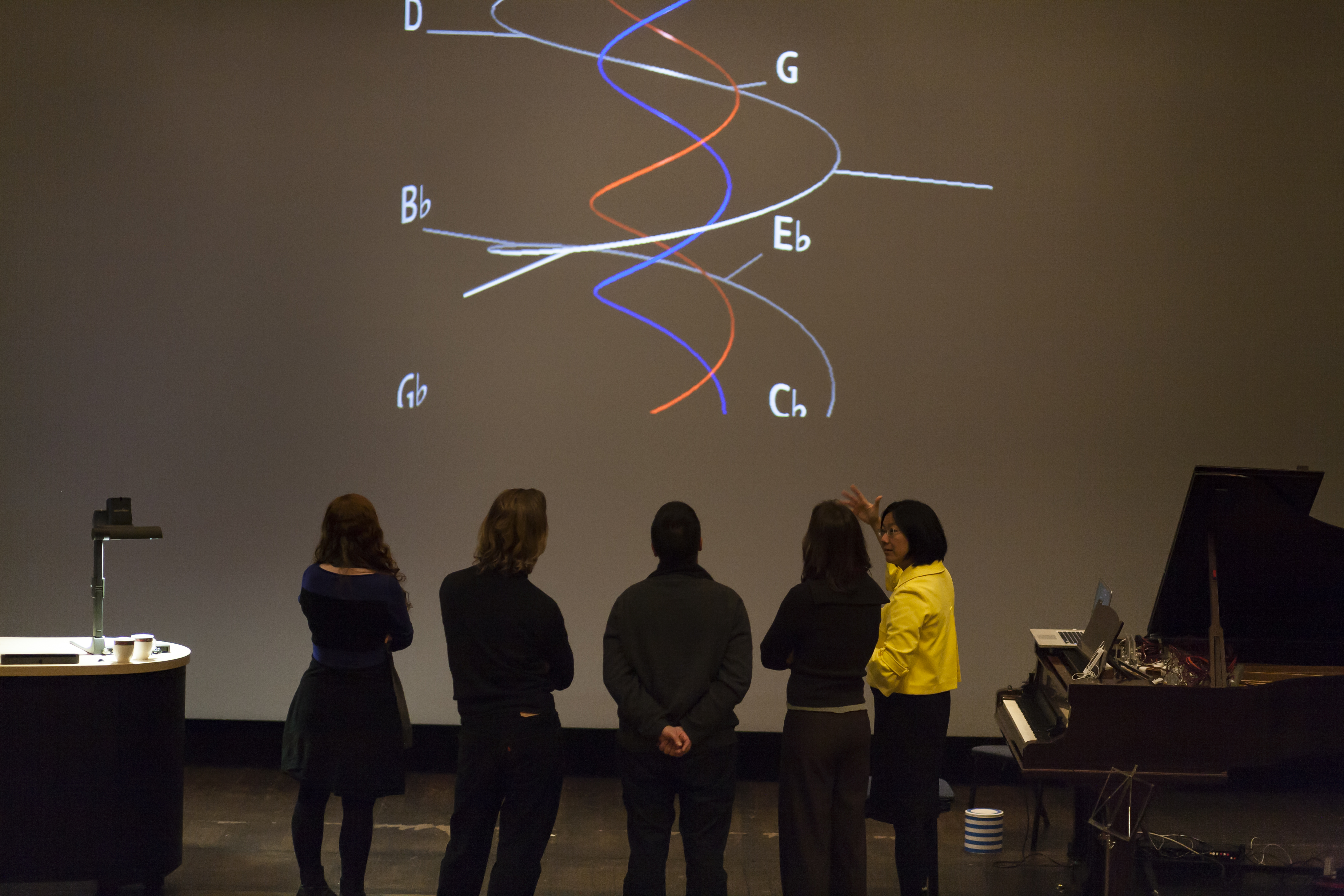

 Discovery of the Month
 Dr Rae Robertson-Anderson is Associate Professor, Chair of Physics and Biophysics, and program director for the undergraduate biophysics program at University of San Diego. She has been a member of the faculty since 2009. Rae received her BS in Physics from Georgetown University in 2003, and her PhD in Physics from UCSD in 2007. She completed her postdoctoral research training in the Molecular Biology department at The Scripps Research Institute. Her PhD and postdoctoral research were funded by an NSF Graduate Research Fellowship and NIH postdoctoral training fellowship.
 Dr Thorunn Helgason is a senior lecturer in ecology at the University of York, UK. She has worked for many years in research focussed on understanding how microbes build healthy soils, and how we can use this knowledge in crop production and habitat conservation. As a higher education professional, she has worked towards widening participation in STEM subjects at undergraduate and postgraduate level, and in public engagement, bringing science into the wider community.
 Dr Julia Shaw
 Dr Brenna Hassett
 Professor Haley Gomez is an astrophysicist working at Cardiff University’s School of Physics and Astronomy. She uses the most sensitive infrared cameras in space, such as the
 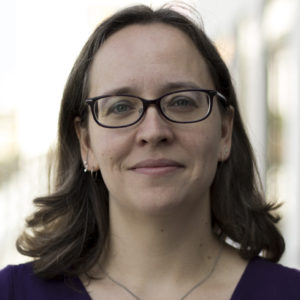 Dr Karen Masters is an astronomer working at the Institute of Cosmology and Gravitation, University of Portsmouth in the UK. She is the spokesperson for the Sloan Digital Sky Survey (SDSS-IV) and the project scientist for the Galaxy Zoo Citizen Science Project. As well as working on her research into galaxy evolution, she has a passion for science (especially astronomy) outreach and public engagement, and for the promotion of equality and diversity in STEM. Karen contributes to the